
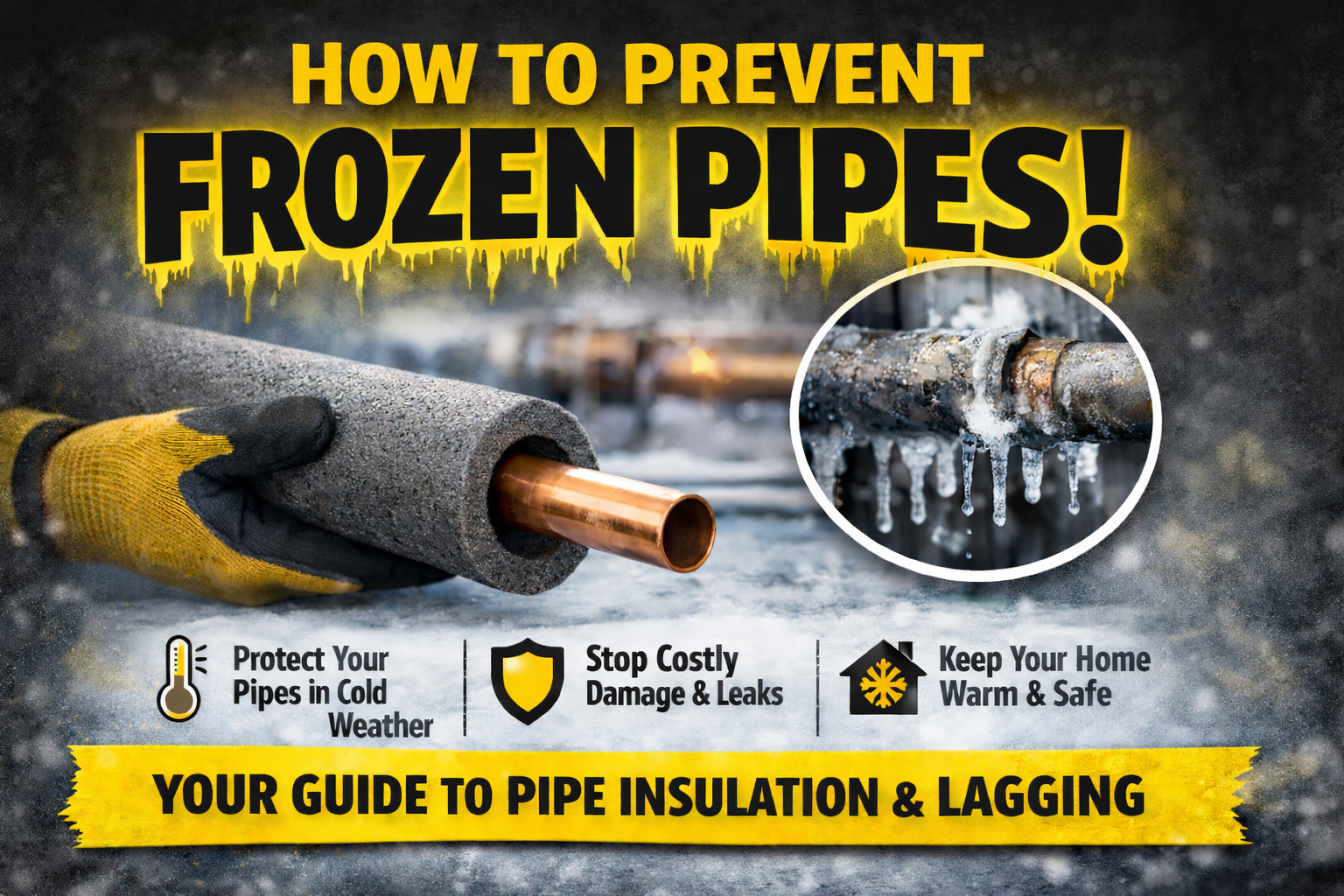
Don't Let Jack Frost Burst Your Pipes: A Quick Guide to Pipe Insulation
Hey there! So it's that time of year again when the temperature drops and we're all bundled up in our coziest sweaters. But while you're staying warm, have you thought about your pipes?
The Cold, Hard Truth About Frozen Pipes
Here's the deal: when temperatures plummet, the water inside your pipes can freeze. And when water freezes, it expands. That expansion can crack or even burst your pipes, leading to some seriously expensive (and messy) problems. We're talking potential flooding, water damage, and repair bills that'll make you wish you'd taken action sooner.
Enter: Pipe Insulation to the Rescue
The good news? Preventing frozen pipes is actually pretty straightforward. Pipe insulation (also called pipe lagging) is your best friend here. It's basically like giving your pipes a warm winter coat.
Why It Works
Pipe insulation creates a protective barrier that:
- Keeps the cold air away from your pipes
- Helps maintain water temperature
- Slows down heat loss significantly
Where to Focus
Pay special attention to:
- Pipes in unheated areas (garages, basements, attics)
- Exterior walls
- Crawl spaces
- Any exposed piping
The Bottom Line
Look, spending a little time and money on pipe insulation now can save you from a massive headache (and wallet-ache) later. It's one of those "ounce of prevention" situations that actually makes sense.
Stay warm out there, and keep those pipes cozy too! ?➡️?

